01 · c. 1880-1914
Victorian and Edwardian red-brick terrace
Two-up-two-down or three-bed bay-front terrace, built for Belfast's industrial boom. Ground floor around 30-45 square metres, solid 9-inch brick walls, suspended timber ground floor, shallow loft. Chimney breasts typically still present even where fireplaces have been closed.
Typical setup
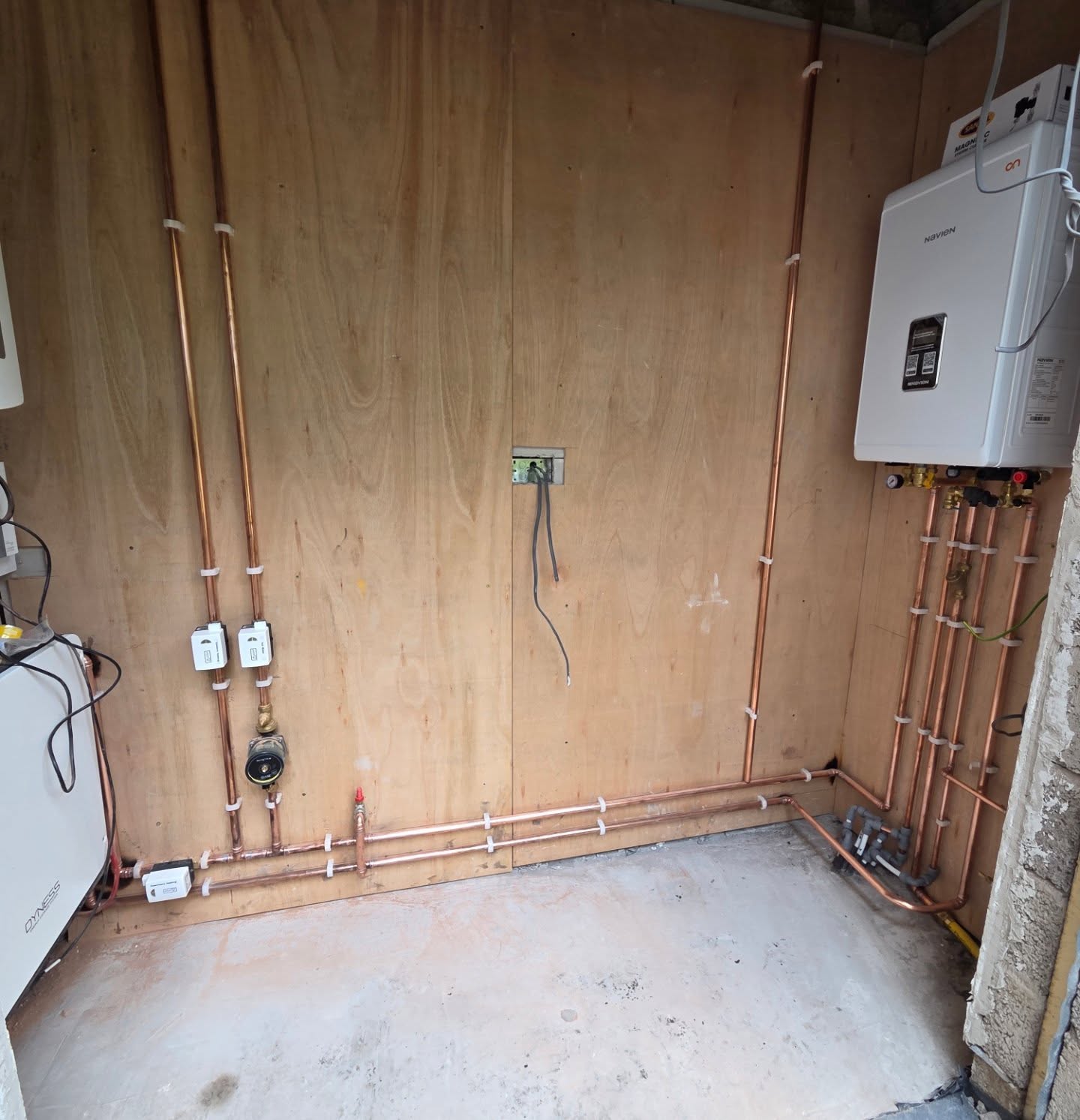
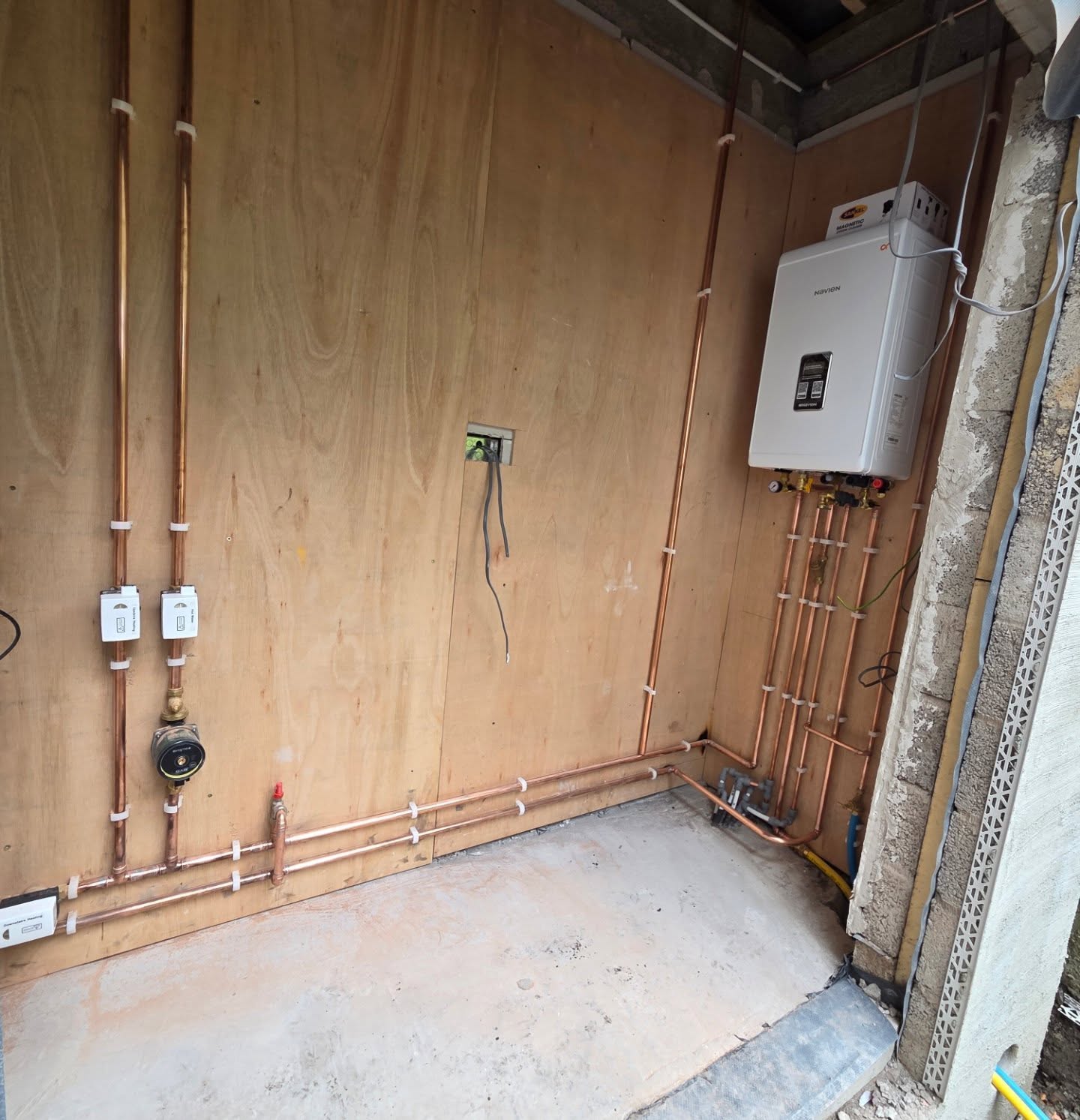
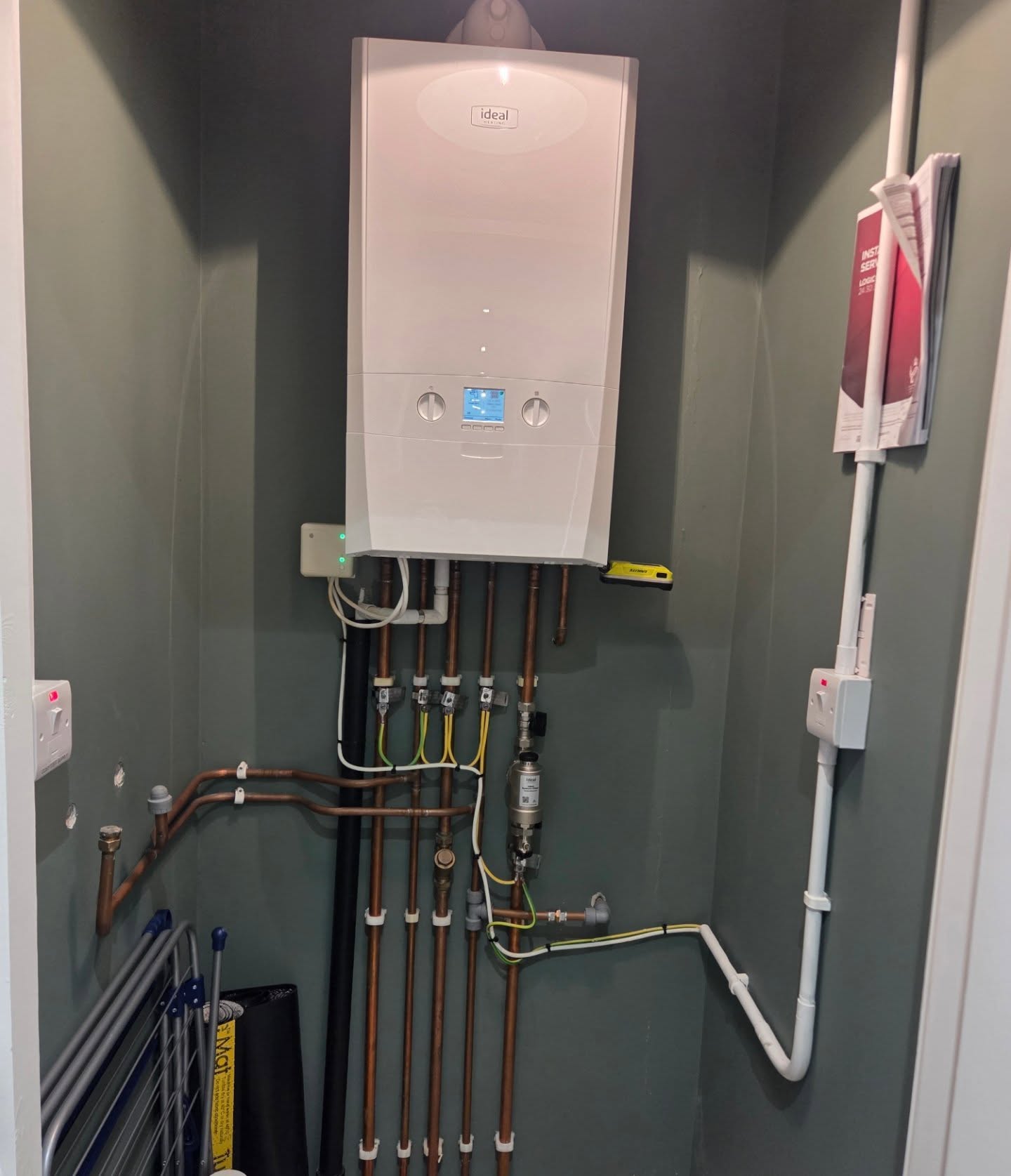
Combi boiler on a kitchen or utility wall, flue to the rear yard or side return. 15mm copper throughout, occasionally some legacy 22mm sections from an earlier system-boiler conversion. Panel radiators 600mm high, one per room. No cylinder. Condensate routed externally to a yard gully, which is a freeze risk.
Common issues
- Lead supply pipe from the main to the internal stop-cock still present in some properties, slow-flow symptom.
- Back-boiler-to-combi conversions done in the 2000s often leave oversized 28mm primary runs upstairs, which trap air and sludge.
- Original stopcock in an inaccessible under-stair cupboard, seized from years of not being turned.
- Flue termination too close to an openable window or the neighbour boundary, missing the 300mm / 600mm Part F distances.
- Cast-iron radiators running on microbore, over-long flow and return runs, cold at the far end.
Best practice on replacement
Measure incoming flow rate with a timed bucket test before specifying boiler output. Below 10 l/min, a high-output combi is the wrong answer; either fit a mains booster or switch to a system boiler + unvented cylinder. Relocate the flue to a compliant position. Fit a magnetic system filter and run a low-temperature chemical flush, not a power flush, if cast-iron rads are retained. Replace the internal stopcock as a matter of course. Route condensate internally to a soil stack wherever geometry allows.